

‘We will remain Rohingya’
The forgotten diaspora rebuilding life in the UK
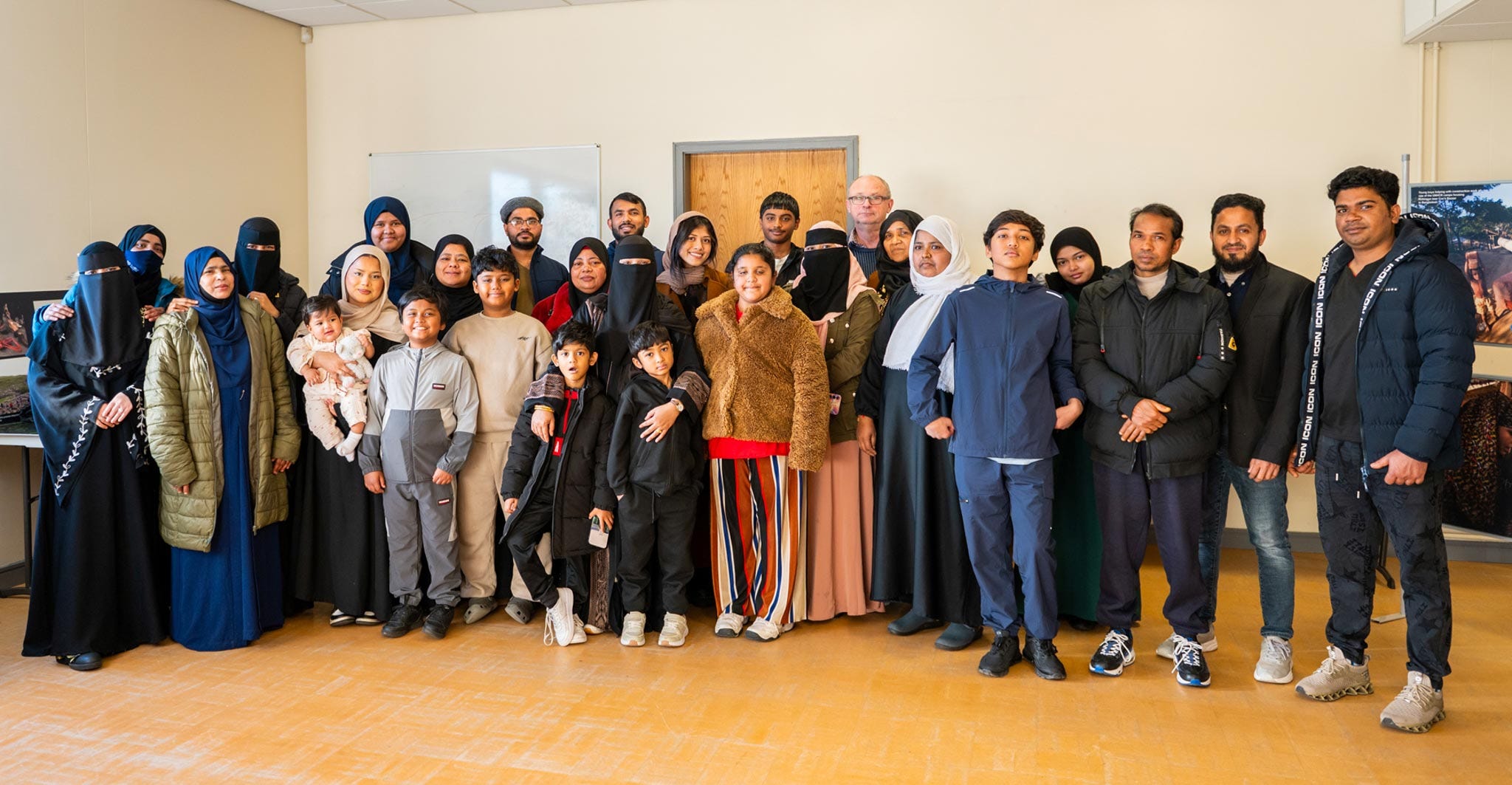
Sometimes, home is a place. Other times, it might be a feeling. And then there are times, as for 1.5 million Rohingya around the world, when home is an act of resistance.
The Rohingya are the largest stateless people in the world, subject to decades of militarised violence which various rights advocates have condemned as a genocide.
But their story does not end with displacement. Rather, as the UK’s Rohingya community illustrates, expressions of unity have become everyday acts of resistance.
Uprooting
At the age of three, Mohammed Amin arrived in Bangladesh on his mother’s chest.
“The only things I knew for twenty-two years of my life were the refugee camp, Bangladesh and the UN,” he said. “I only knew my Islamic celebrations and World Refugee Day.”
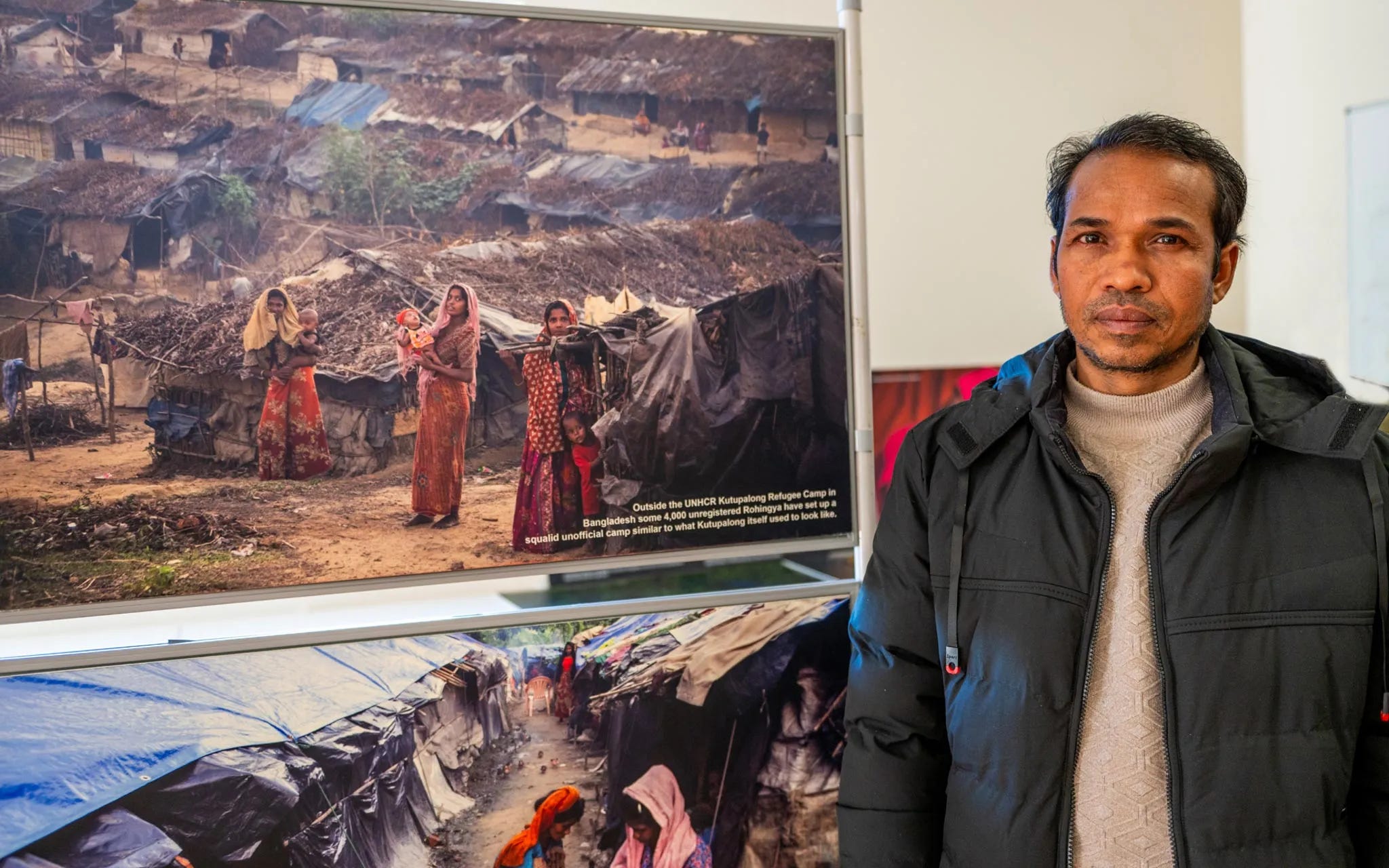
Mohammed, along with his mother and siblings, lived in the Nayapara refugee camp, one of the thirty-three highly congested camps in the Bangladeshi district of Cox’s Bazar which host over a million Rohingya for whom life in Myanmar was unliveable – over half of which are women and girls.
“The camp is like an open-air prison,” he said. “You just live to survive.”
For Mohammed, uprooting was not a choice but a survival impulse anchored to a long and complicated history.
Myanmar (formerly Burma) is a tapestry of 135 ethnic groups officially recognised ethnic groups, many with different languages and religious customs. This is not only due to the country’s natural geographic makeup, but also mass migration encouraged by the British colonial government between parts of its empire to sustain its industrial projects and ‘divide-and-rule’ strategy.
After independence in 1948, the new government sought to consolidate its authority around a national image that centred around the Burmese language and Theravada Buddhism. Ethnic groups that did not align with these criteria risked being excluded from the national picture.
Over the decades since, the government has engaged in protracted civil conflicts in the effort to subjugate armed ethnic groups fighting for their own regional autonomy.
Even though most Rohingya can trace their roots through generations to Arakan (the land now known as Rakhine state), the Burmese government does not legally recognise them as an ethnic group, but as ‘illegal Bengali immigrants.’ While Bengali people were transported to Arakan as labourers by the British during the colonial period, historical sources indicate that the Rohingya (a separate and distinct ethnic group) had been there long before.
But in 1982, based on the distorted historical reading that the Muslim-majority Rohingya were Bengali ‘invaders’ in Burmese land, Myanmar’s military junta stripped them of citizenship.
Mohammed believes that a lesser known motivation was that the Rohingya had fought alongside the British in World War Two, while other Burmese forces fought with Japan.
“Their intention is clear,” Mohammed said. “To wipe us out from Burma and to kill us as a whole.”
Tens of thousands of Rohingya have been murdered, assaulted and disappeared by state and non-state forces with impunity under successive military and civilian governments in Myanmar. Around 600,000 Rohingya remain in Rakhine state, confined to camps without adequate food, water, healthcare and education – an apartheid, according to the UN director at Human Rights Watch.
Rebuilding
In Brexit Britain, the word ‘immigration’ can be like a fully-loaded magazine of division. But does Mohammed’s story not remind us of the value that this fundamental human right offers to millions across the world?
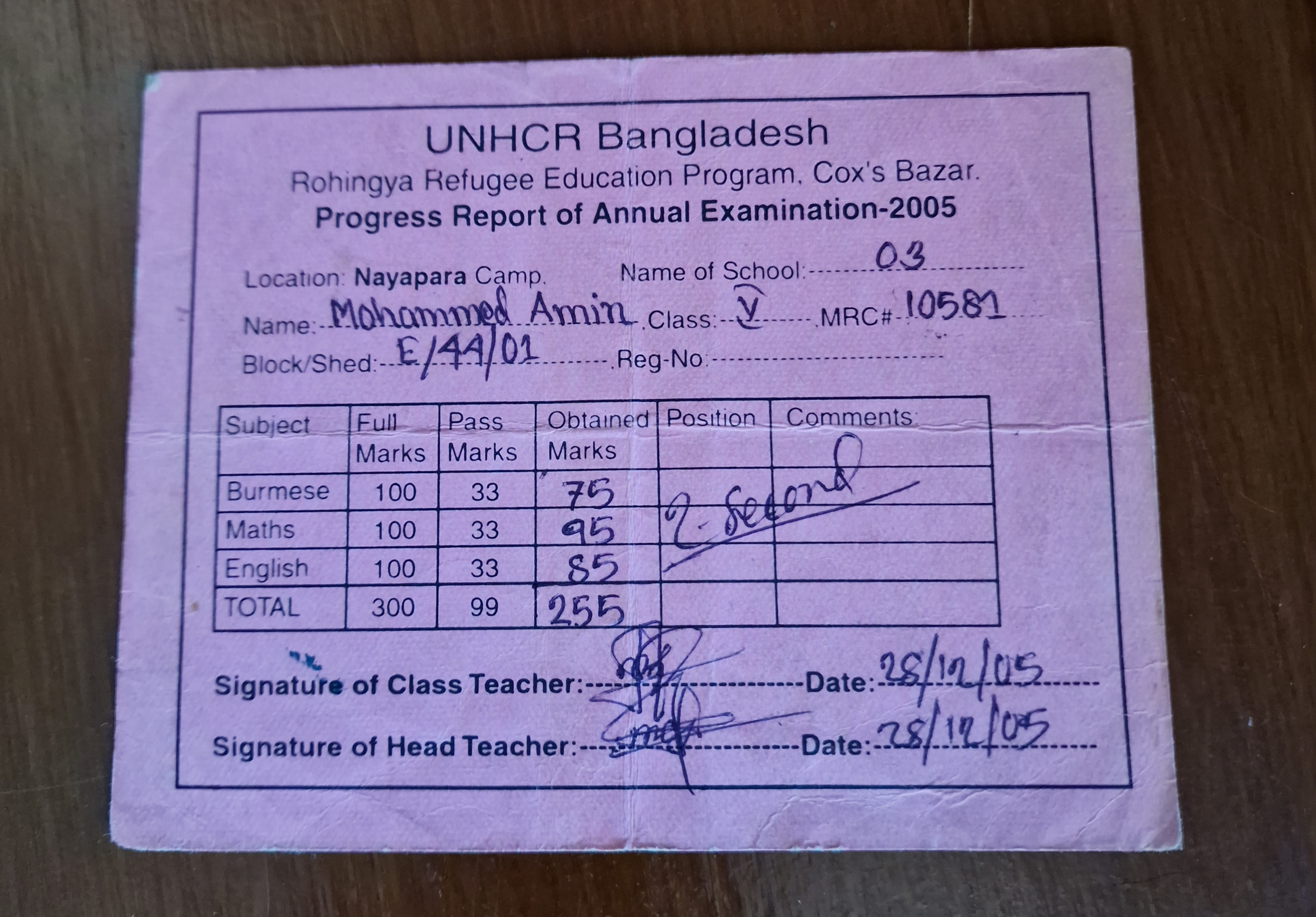
At the age of twenty-two, the highest level of education Mohammed had was a pink leaflet administered by the UN Refugee Agency signalling courses in Burmese, Maths and English. Today, he is a university graduate, a civil servant and CEO of Rohingya Community UK (RCUK), a Bradford-based organisation that helps Rohingya refugees rebuild their lives.
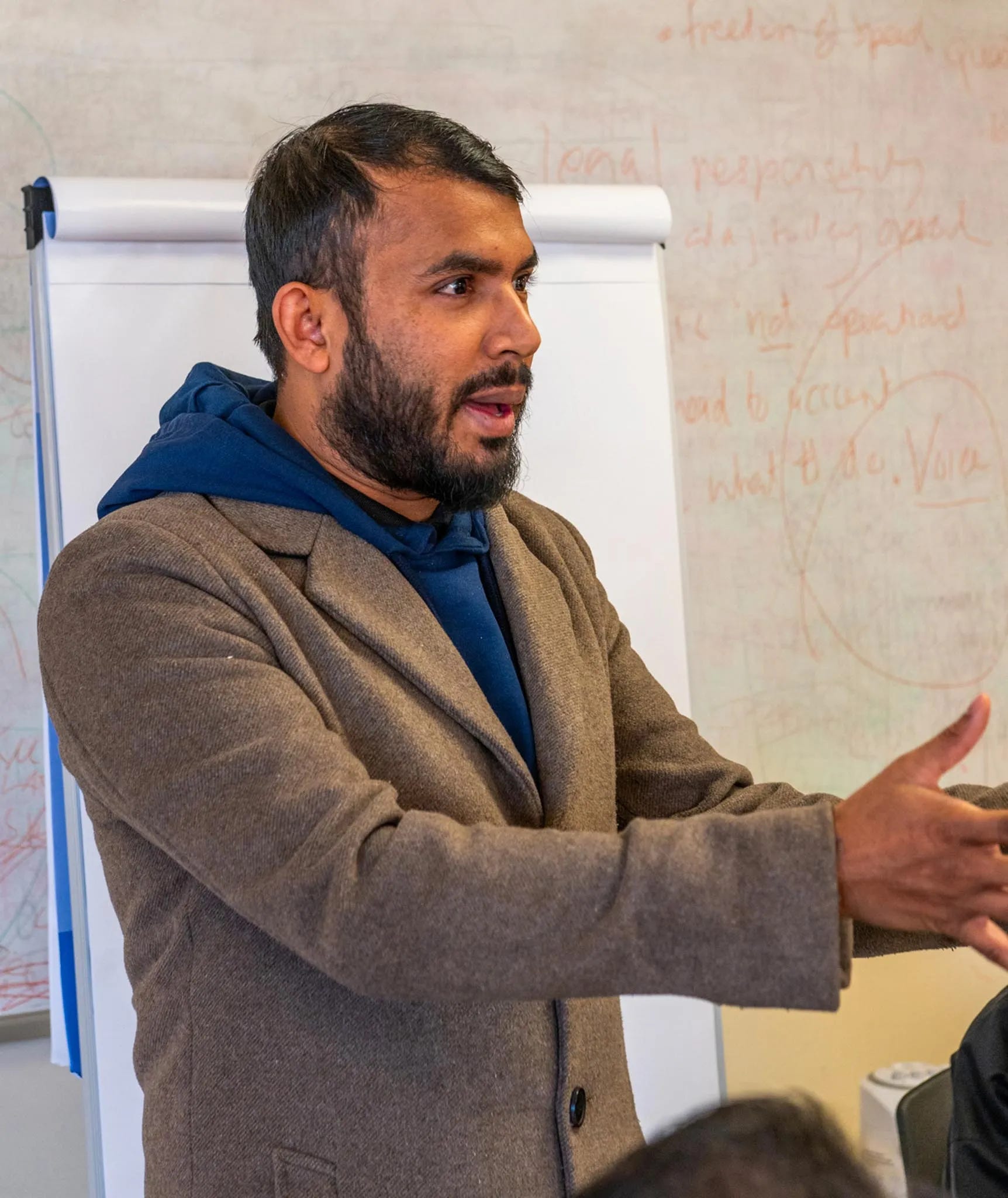
“Now I have a passport, I have an education, I have a job,” he said. “I have a society to welcome me, a market to go shopping, a mosque to go to without fear of my identity.” Mohammed has been able to rebuild his life in Bradford.
But, he emphasises, he is the same child who was stuck in Nayapara; the difference is the opportunities he was provided. As CEO of RCUK, Mohammed’s mission is to help provide those opportunities for others by raising awareness of the Rohingya crisis, advocating for lawful justice and empowering affected communities to lead and shape their own solutions.
One of the ways that RCUK pursues these aims is through the Rohingya Education System, a Rohingya-led initiative providing children with access to an internationally-accredited education in 60 schools across Cox’s Bazar.
“Education is the key to a child,” Mohammed said. “The Rohingya Education System combines Rohingya cultural identity, Burmese language and international curriculum, and is certified by the UK authority.”
Rewriting
Equally important as the physical violence against the Rohingya, according to Mohammed, is the effort to erase their identity entirely.
In the weeks before speaking to me, Mohammed visited the International Court of Justice (ICJ) where The Gambia has lodged a case against Myanmar, charging its government with the genocide of the Rohingya. The case is ongoing at the time of writing.
“And I heard in the court, they continuously denied our identity,” he said. “They are not referring to us as a people, as Rohingya. They are referring to us as illegal Bengalis and foreigners.”
The denial of Rohingya identity is also perpetuated more insidiously through the silence within the international community - silence that rings loudest in the UK, given the role of British colonialism in contributing towards the crisis.
“The UK not only has a moral but a legal responsibility to protect and recognise the Rohingya people,” Mohammed said. “We gave blood for the British during the Second World War. It all has to start from the UK because the UK has the historical connections to Burma.”
Recognition from the British government would provide significant legal leverage for the Rohingya as well as paving the way for their economic stability as migrants.
“Rohingya people often pretend to be Pakistani, Bangladeshi or Indian because they need an identity to be able to exist in the system and work,” Mohammed said. This is due to a lack of official recognition in official censuses (the UK census only includes ‘Burmese’ as a category) as well as a void in political discussion and formal education regarding the Rohingya’s story. This systematic lack of recognition, Mohammed explained, risks pushing Rohingya identity towards erasure.
Equally as important, official recognition would also underline the lived experiences of the Rohingya as an ethnic group and as real people beyond ‘statelessness.’
“Now, in the media, Rohingya are known only as refugees, stateless, people of nowhere,” Mohammed said.
But this is not the end of the story. “The Rohingya people are not defined by victimhood. We are defined by resilience, dignity and a pursuit of lawful justice,” he added.
Rohingya community leaders like Mohammed are fighting to rewrite this story through acts of community and celebrations of Rohingya identity.
Once a year, during the summer holiday, RCUK organises a trip to the seaside for a Rohingya celebration. “We have Rohingya food, Rohingya music and speak in Rohingya. It is important to have an opportunity to keep that alive,” he said.
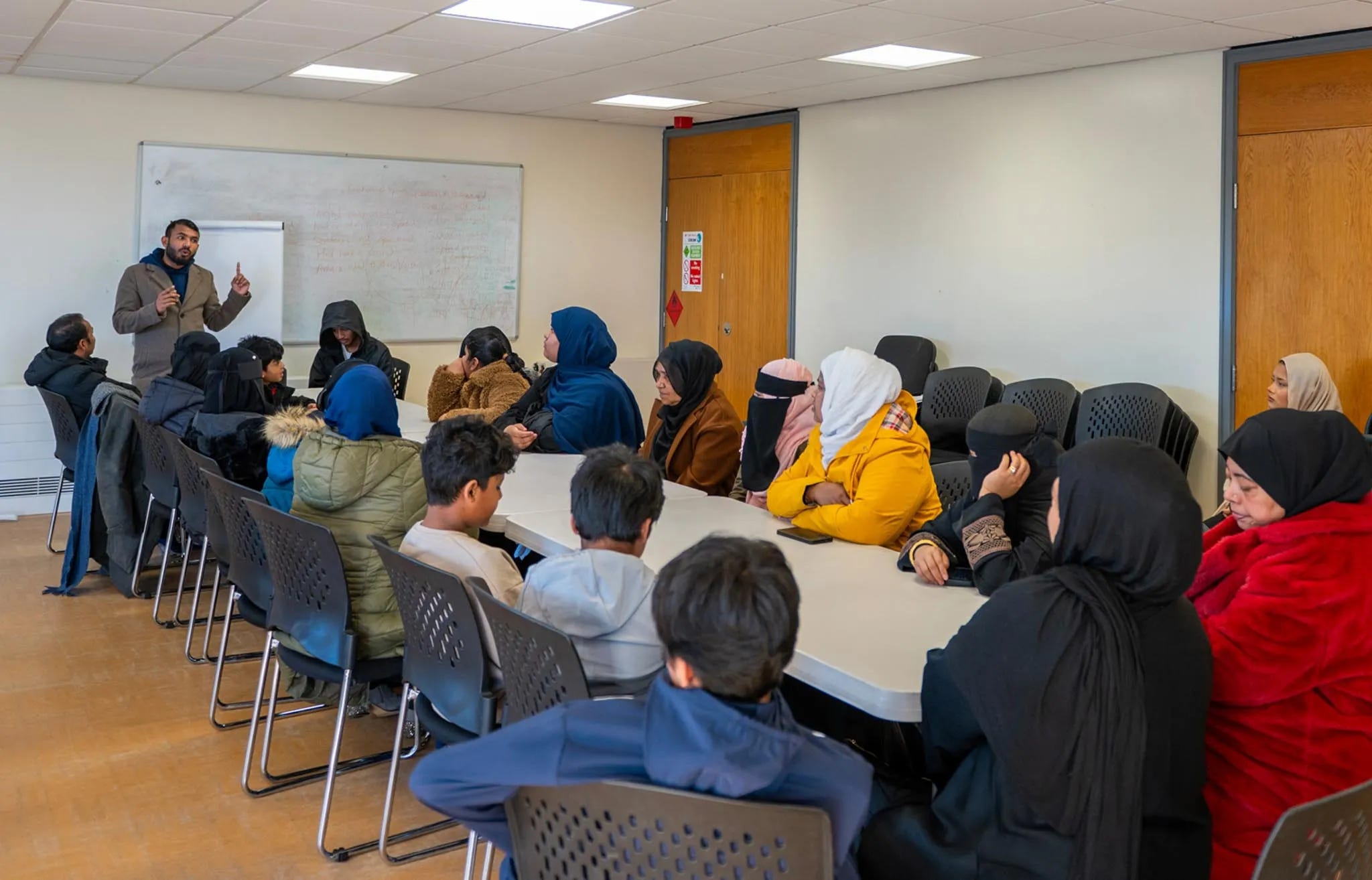
Beyond the summer party, RCUK hosts multiple events to celebrate international awareness days as well as multi-faith Iftar events during Ramadan.
In the context of militarised violence, systematic human rights violations and historical erasure, it can be easy to associate the Rohingya with sweeping and increasingly politicised labels: refugee, stateless, victim.
Within this landscape, however, acts of unity do not die but grow with even stronger colours.
Mohammed Amin’s story reflects the journey of many Rohingya: one that is punctuated by violent displacement yet refuses to be defined by it.
“We are Rohingya. We were Rohingya. We will remain Rohingya.”
MM